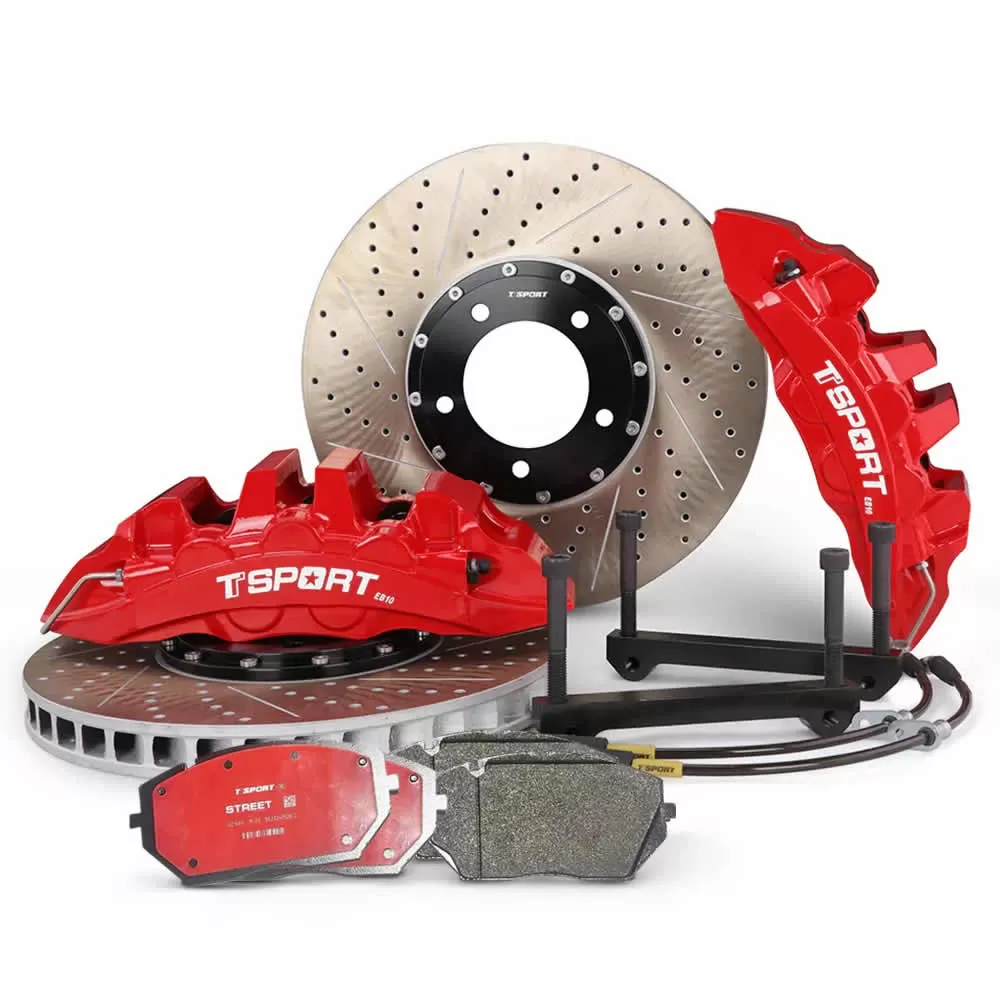
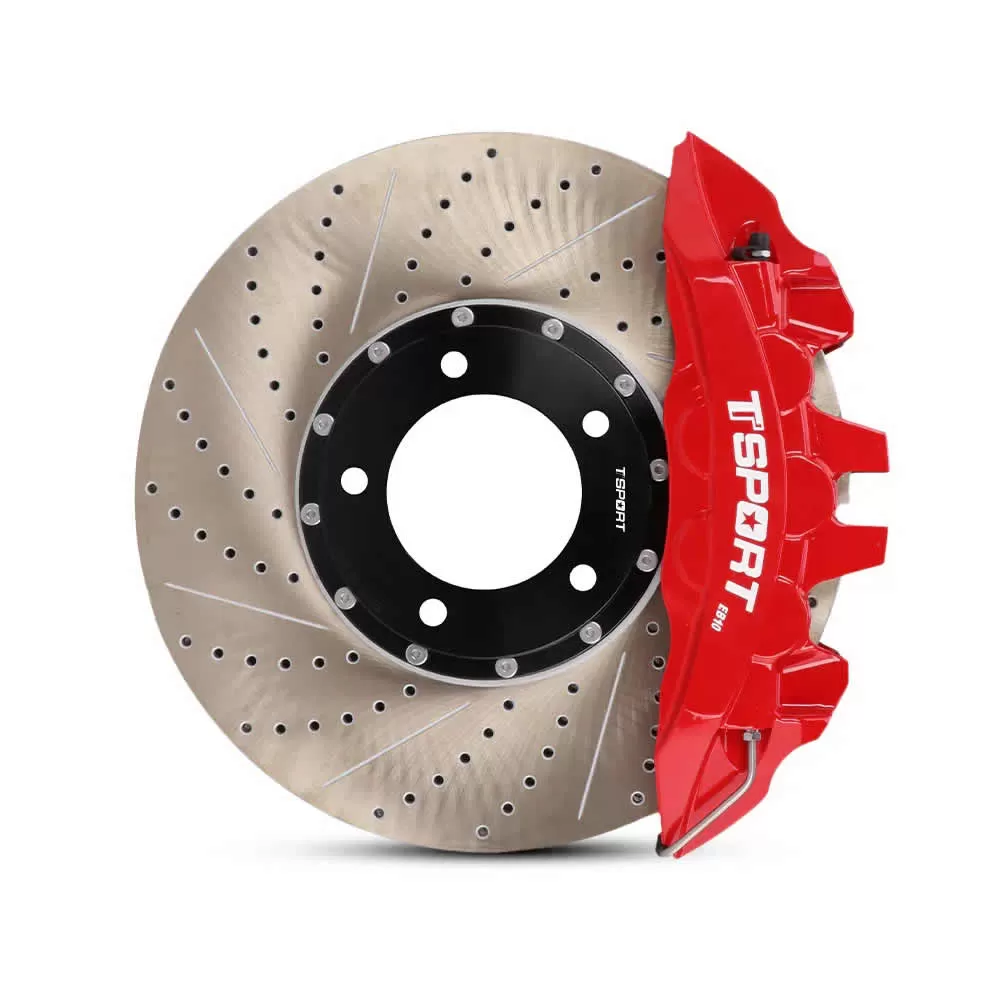
The TTSPORT Evolution EB10 is the flagship front brake upgrade kit in the TTSPORT Evolution series. Engineered specifically for the front axle of high-horsepower sedans, heavy SUVs, rugged pickup trucks, and heavy new-energy vehicles, it prioritizes immense braking torque, minimal thermal fade, and reliability suitable for both street and track use. Designed to meet demands for extreme braking torque, consistent pedal feel, and repeatable heat dissipation, it serves as a premium modification solution for high-load front braking scenarios.
The EB10 kit features a two-piece forged 10-piston caliper paired with extended brake pads and 420mm or 440mm two-piece rotors. It delivers controllable initial bite, linear braking modulation, and unwavering confidence, ensuring stable, reliable performance—whether chasing lap times or coming to a stop during daily street driving.
1. EB10 Technical Specifications
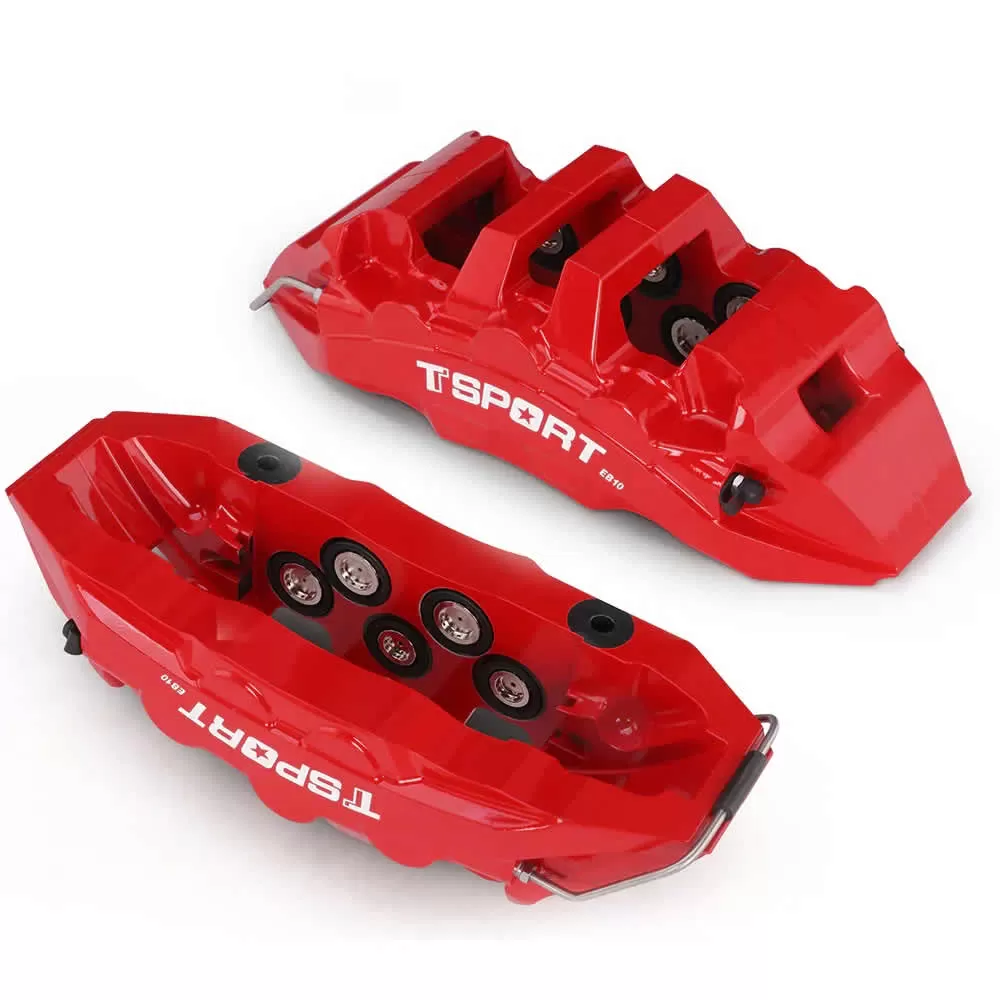
The EB10 utilizes a two-piece forged aluminum alloy opposed 10-piston caliper. It boasts the highest piston count and maximum braking torque capacity of any front-axle model in the series. Key technical features include:
Rigid Structure: Employs a through-bolt reinforcement design that increases structural strength by 20%–30% compared to conventional calipers. This enhances resistance to deformation under extreme braking pressure, ensuring uniform force transmission and a more stable, solid pedal feel.
Piston Configuration: Features a total of 10 opposed pistons (5 per side) with diameters of 28mm, 28mm, 32mm, 32mm, and 32mm, resulting in a total piston area of 67cm². The pistons feature a two-piece ventilated heat-dissipation structure; combined with the caliper body's hollowed-out airflow design, this accelerates heat exchange and significantly reduces thermal fade during continuous braking. Physical Dimensions: The caliper measures 128.88mm in height, 415.28mm in length, and 168mm in width, ensuring compatibility with large-diameter brake discs and large-sized wheels.
Daily Durability: Equipped with piston dust boots as standard, the design meets the dust and corrosion protection requirements for both aggressive track driving and daily street commuting; this extends maintenance intervals and ensures suitability for all-weather use.
Additional specifications are listed below:
|
caliper
specifications
|
|
Model/Application
|
EB10
|
|
axle
position
|
front
|
|
Number
of pistons
|
10
Pistons
|
|
Piston
type
|
Two-piece
insulated piston with dust cover
|
|
Piston
diameter
|
28 mm ×
4 / 30 mm × 6
|
|
Piston
total area
|
Each
caliper is 67.0 square centimeters (total of all pistons).
|
|
caliper
dimensions
|
415 mm
(length) × 168 mm (width) × 129 mm (height)
|
|
Manufacturing
process
|
Two-piece
forged aluminum alloy body
|
|
net
weight
|
Each
caliper weighs 7.50 kg, excluding brake pads.
|
|
Surface
treatment
|
High-temperature
gloss coating
|
|
Recommended
wheel size
|
20
inches or larger
|
|
Recommended
rotor size
|
Diameter
420–440 mm × 40 mm
|
|
Brake
disc options
|
|
Specification
|
Option A
— Iron
|
Option B
— Carbon ceramic
|
|
Rotor
material
|
Heat-treated
high-carbon cast iron
|
Carbon
ceramic composites (CCB)
|
|
axle
position
|
front
|
front
|
|
Rotor
size
|
Diameter
420/440 mm × 40 mm
|
Diameter
420/440 mm × 40 mm
|
|
put up
|
Two-piece
rotor assembly
|
Two-piece
rotor assembly
|
|
ventilation
|
Internal
ventilation
|
Internal
ventilation
|
|
Rotor
installation
|
Depending
on the rotor size and application, it can be either stationary or floating.
|
Floating
|
|
Oriented
design
|
Yes—left
and right.
|
Yes—left
and right.
|
|
Facial
patterns
|
Curved
groove / Textured groove / Wavy groove / Drilling and slotting
|
Cross
drilling
|
|
Brake
pad formula
|
|
Specification
|
Iron
rotor pad
|
CCB
Rotary Brake Pads
|
|
Compatible
rotor
|
Iron/steel
rotors only
|
Carbon
ceramic rotor only
|
|
Operating
temperature
|
0–600 °C
|
0–700 °C
|
|
Average
value μ
|
0.38
(varies with temperature, pipeline pressure, and rotor condition)
|
0.45
(varies with temperature, pipeline pressure, and rotor condition)
|
Note: Iron brake
pads and carbon ceramic brake pad systems are incompatible. Always use brake
pads that match the material of the brake discs being installed.
2. Brake Disc and Kit Configuration
Brake Disc Specifications
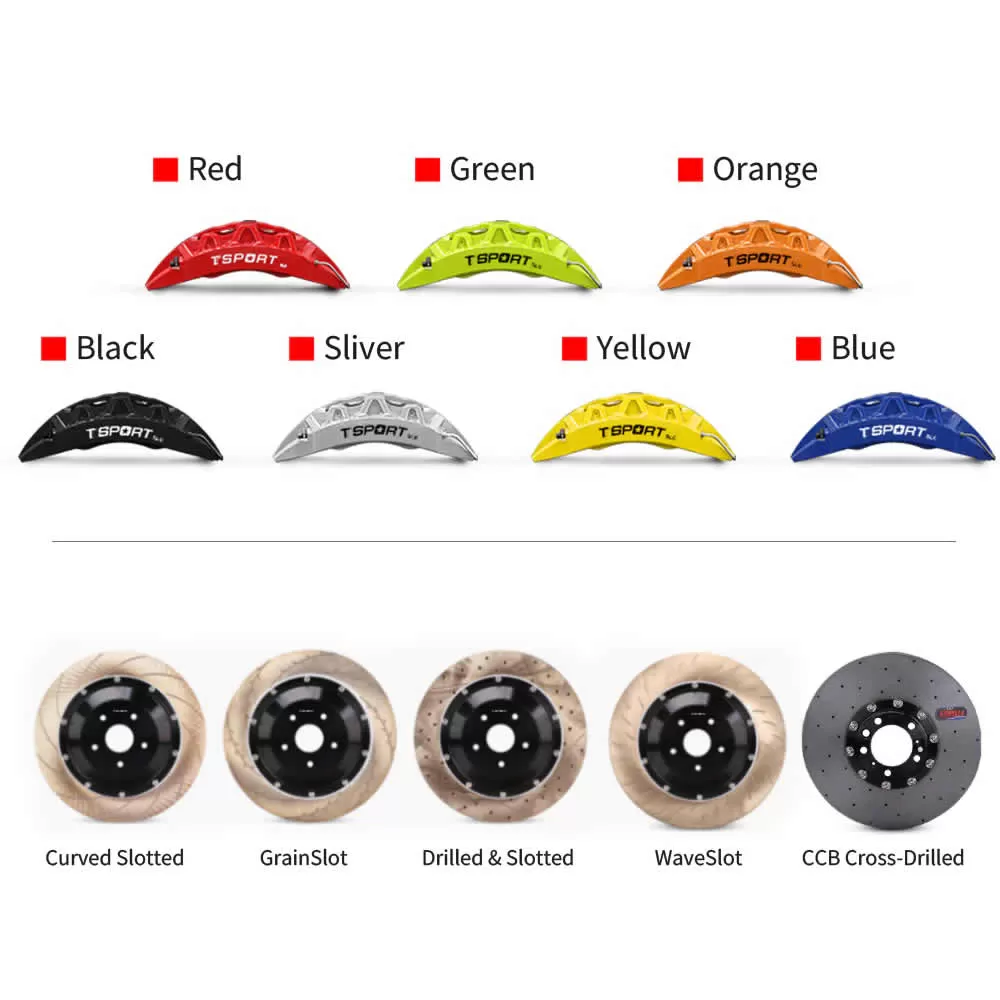
The standard configuration features a 420×40mm two-piece floating steel brake disc, requiring a wheel size of 21 inches or larger. Optional upgrades include a larger 440mm specification, as well as custom carbon-ceramic discs, which further reduce unsprung mass and enhance heat resistance limits.
A variety of disc face patterns are available—including curved slots, slotted and drilled, wavy designs, and drilled carbon-ceramic—allowing for a tailored balance between heat dissipation efficiency, debris/water clearance, and braking friction performance.
The two-piece floating structure, paired with a lightweight alloy hat, mitigates disc deformation caused by thermal expansion and contraction while reducing unsprung weight to optimize chassis dynamic response.
Complete Kit Components
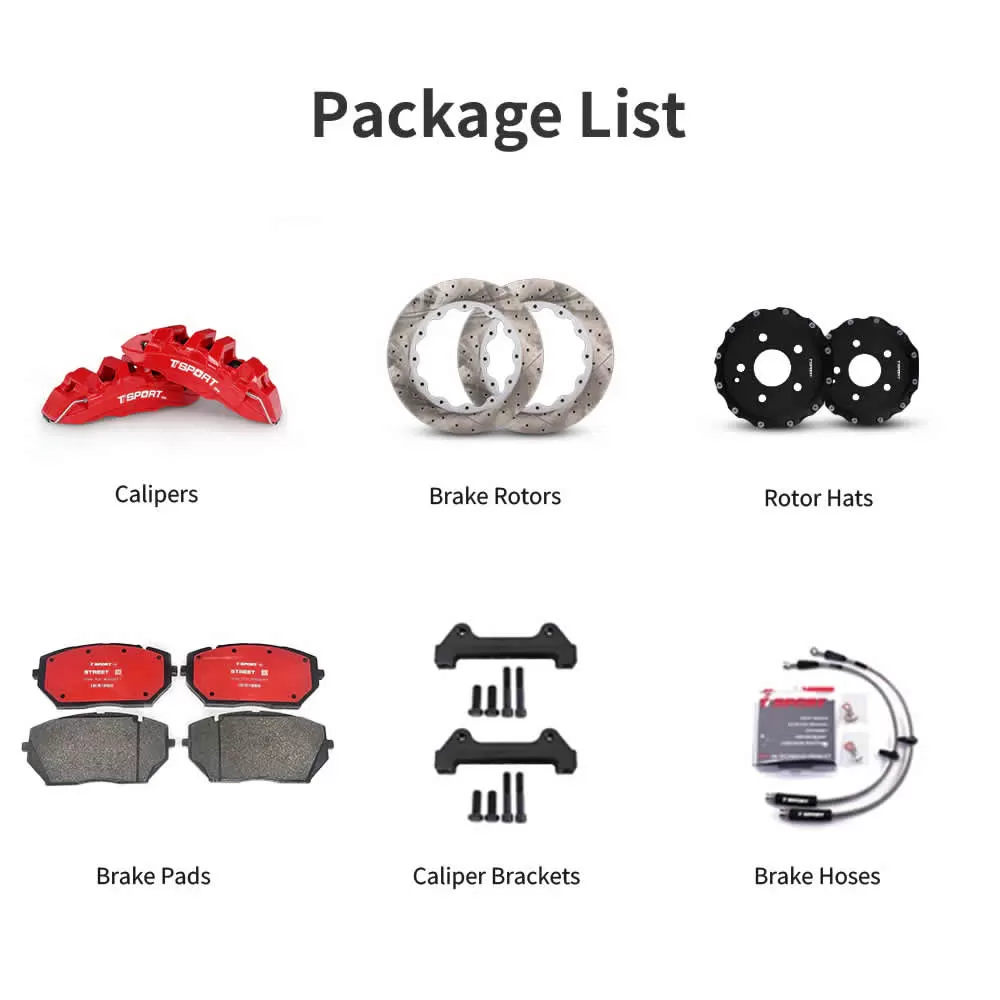
This front brake kit is custom-engineered for specific vehicle applications. The standard package includes:
Calipers ×2: Two EB10 forged 10-piston front calipers.
Brake Pads: A complete set of brake pads for both calipers.
Brake Rotors ×2: Two front rotors matched to the selected material and size.
Caliper Brackets ×2: Two vehicle-specific, CNC-machined caliper mounting brackets.
Rotor Hats ×2: Two CNC-machined rotor hats matched to the specific application.
Brake Hoses ×2: Two stainless-steel braided brake hoses featuring OEM-style chassis-side fittings.
3. Aesthetics and Customization Options
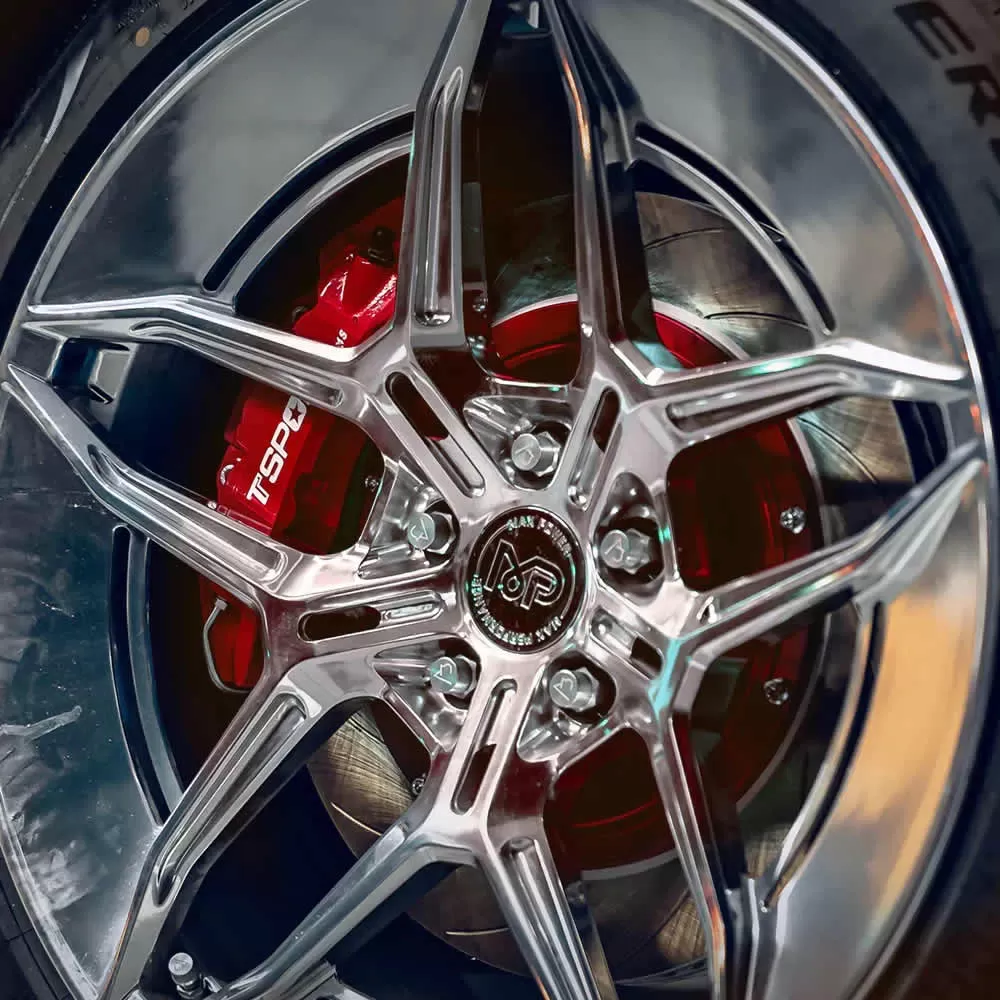
The EB10 caliper is available in seven standard colors—Red, Fluorescent Green, Orange, Black, Silver, Yellow, and Blue—with custom color options also available. Brake rotor styles can be mixed and matched to suit various aesthetic preferences.
4. Performance Profile and Use Cases
Braking Characteristics: The uniform 10-piston layout distributes force evenly across the brake pads, reducing the load on individual pistons and offering superior resistance to heat fade during continuous braking compared to calipers with fewer, larger pistons. The pedal feel is linear and refined: soft and controllable during initial engagement, yet offering ample braking power in the mid-to-late stages of the stroke. It is designed to meet the high-intensity braking demands of heavy, high-horsepower vehicles.
Vehicle Compatibility: Primarily designed for mid-to-large high-performance SUVs, rugged pickup trucks, high-horsepower modified sedans, and heavy new-energy vehicles (NEVs), with specific optimizations for vehicles where the front axle bears a significant portion of the braking load. The EB10 is a high-performance brake kit engineered specifically for these platforms. The caliper brackets are precision CNC-machined for a perfect fit, and the brake hoses utilize OEM-specification chassis-side connectors. Please provide your vehicle's year, make, model, trim level, and wheel specifications so we can confirm kit compatibility and bracket availability.
Use Cases: Positioned for "Street & Track" dual-use; it delivers the smoothness and reliability required for daily commuting while also handling the sustained braking demands of track days and spirited mountain driving.
5. Related Questions
What is the function of the 10-piston caliper regarding braking performance?
The 10-piston layout (4×28 mm + 30 mm) distributes clamping force across a longer brake pad, ensuring even pressure distribution, minimizing taper wear, and enabling controlled initial bite—with braking force remaining linear even as rotor temperatures rise. The total piston area per caliper is 67.0 cm².
What rotor sizes and materials are available?
Two-piece rotors are available in Ø420 mm × 40 mm and Ø440 mm × 40 mm specifications, with material options including heat-treated high-carbon cast iron or carbon-ceramic composite (CCB). Cast iron rotor surface patterns include curved slots, dimpled slots, wavy slots, or drilled and slotted designs. CCB rotors feature a cross-drilled design and a floating mounting system.
What wheel size is required for the EB10?
A minimum wheel size of 20 inches is recommended, with a clearance of at least 108 mm between the inner wheel barrel and the inner face of the spokes. As wheel offsets, spoke geometries, and rim profiles vary, we strongly recommend performing a clearance check or using a fitment template before ordering.
What is the difference between iron-compatible and carbon-ceramic-compatible brake pads?
Iron-compatible pads operate within a temperature range of 0–600°C with an average friction coefficient (μ) of 0.38. Carbon-ceramic-compatible pads operate within a range of 0–700°C with an average friction coefficient (μ) of 0.45; they are compatible only with CCB rotors, and pads/rotors of different material types are not interchangeable.
Is a bed-in period required?
Yes. A proper bed-in process is essential for evenly transferring pad material onto the rotor surface, stabilizing the friction layer, and fully realizing the pads' torque and thermal performance capabilities. Skipping the bed-in phase can lead to issues such as brake judder, pad glazing (surface hardening), and inconsistent pedal feel.