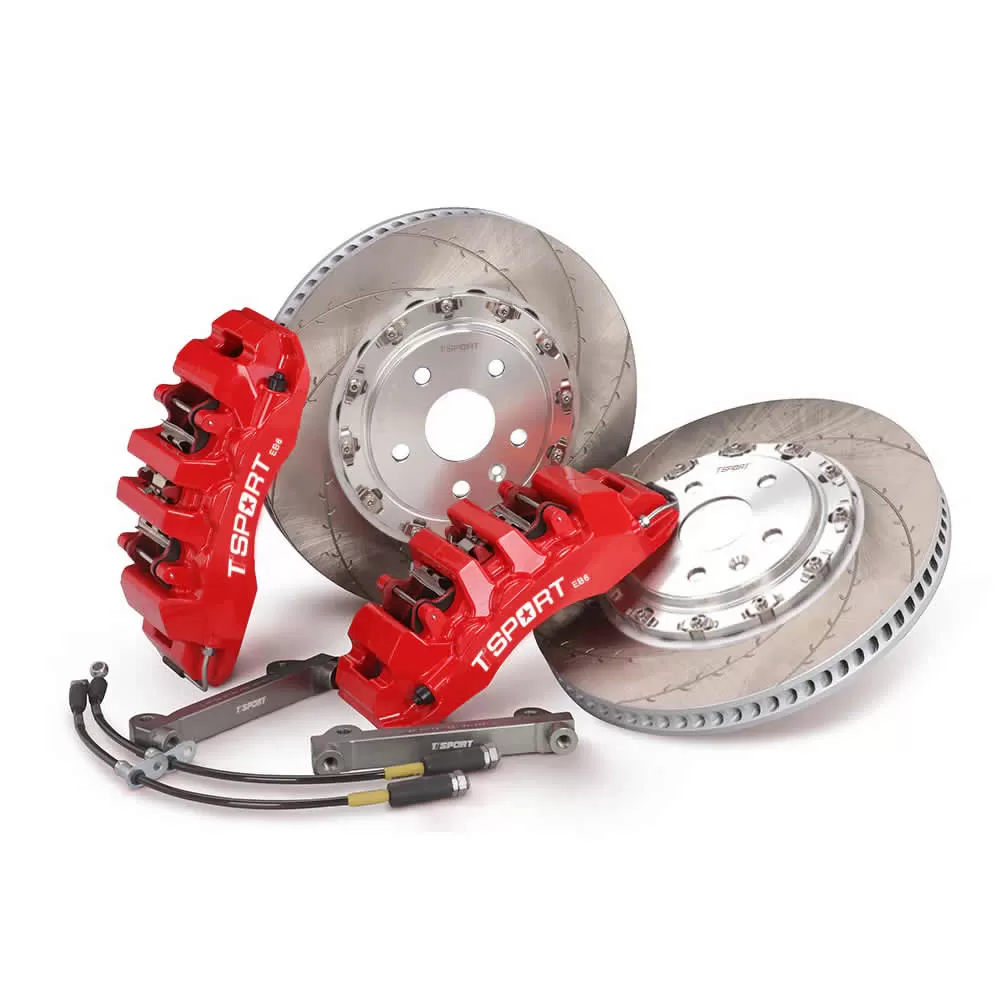
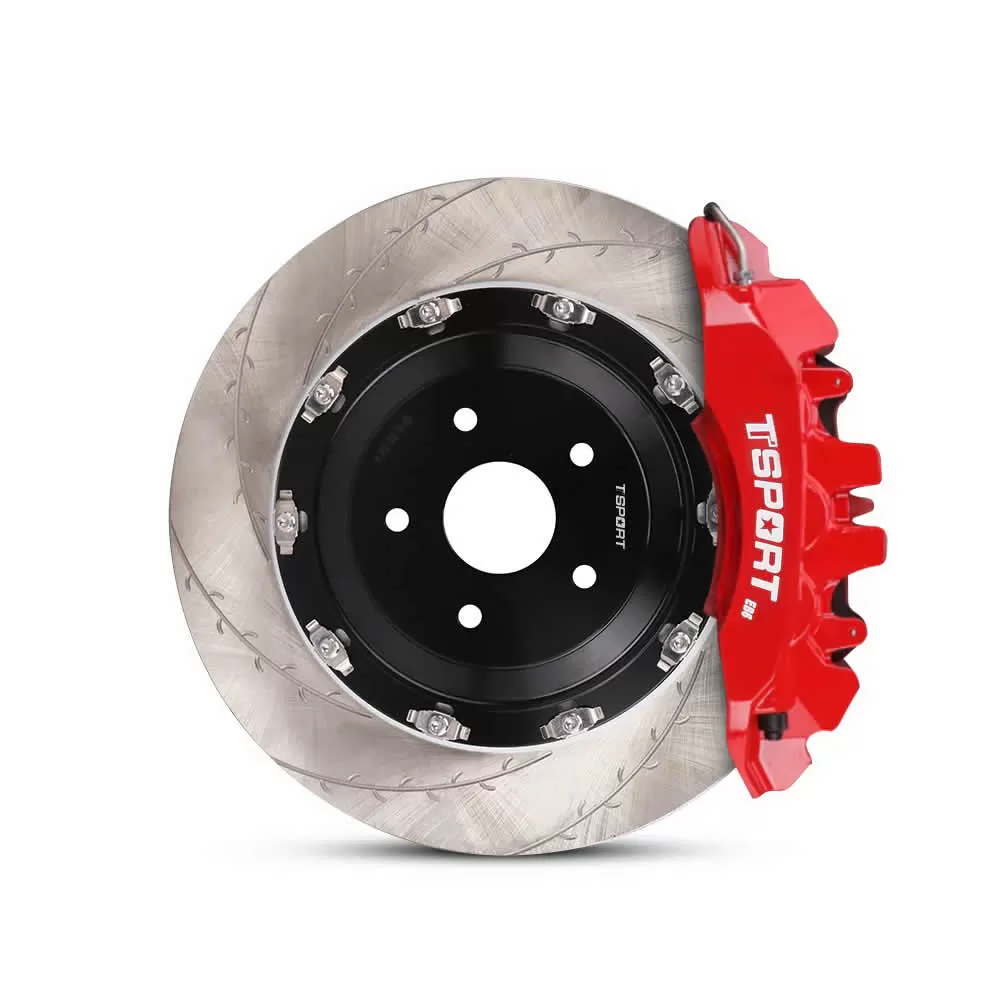
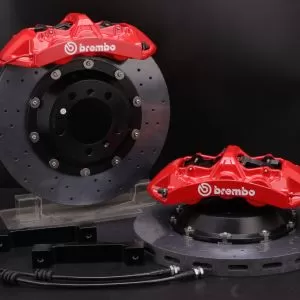
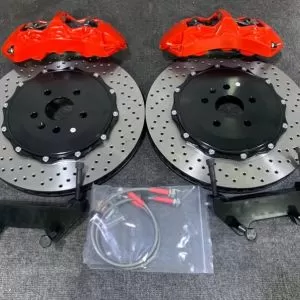
The TTSPORT Evolution EB6 is a front-axle, six-piston big brake kit designed for drivers who demand superior heat capacity, precise pedal feedback, and consistent braking performance that surpasses OEM capabilities. Featuring a two-piece forged aluminum caliper, a staggered piston layout, and 36mm two-piece brake discs, the system effectively manages heat to ensure predictable braking performance across every lap and every stop.
Positioned as the mid-range option in the TTSPORT Evolution series, the EB6 offers a balanced performance profile suitable for both street and track use. It is specifically engineered for heavier vehicles—such as sports sedans, SUVs, MPVs, and modified cars—striking an ideal balance between braking power, heat dissipation (fade resistance), and daily durability.
1. Caliper Technical Specifications
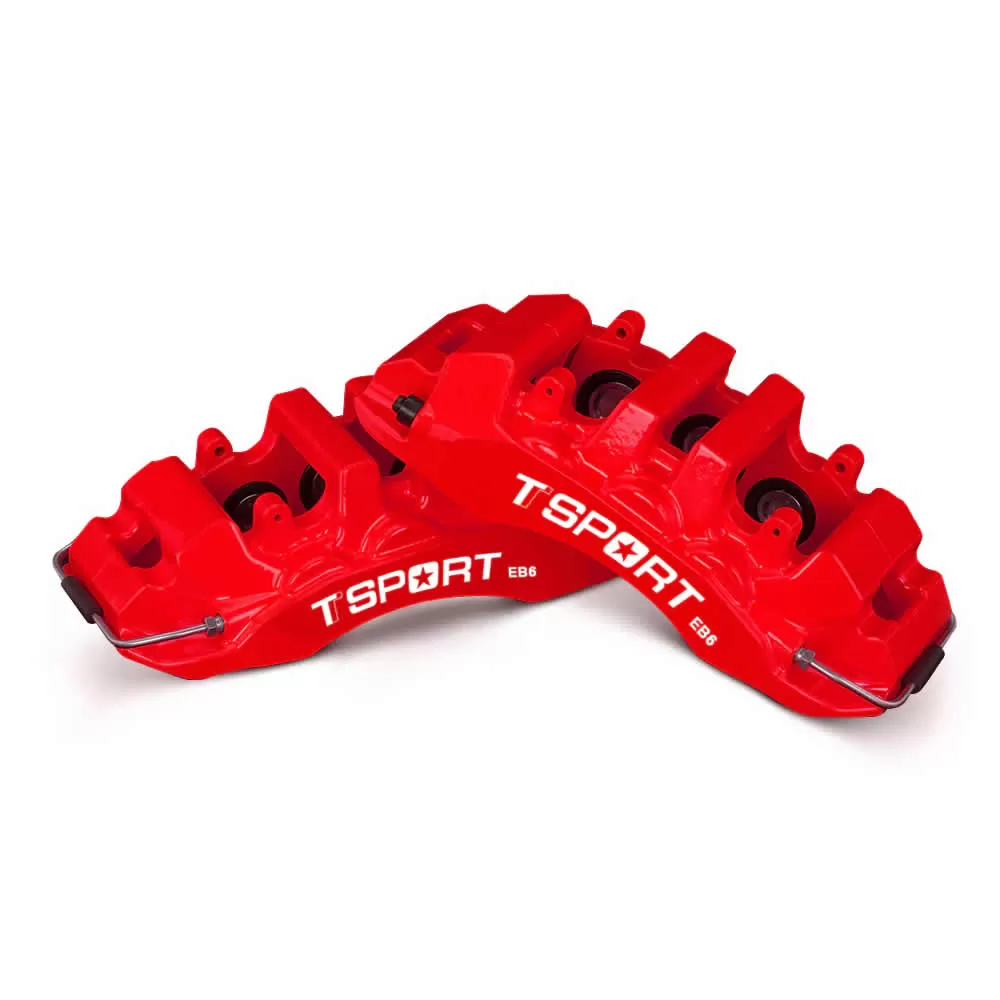
The EB6 utilizes a two-piece forged aluminum opposed 6-piston caliper, precision-machined via CNC. The forging process optimizes the alloy's grain structure, providing superior resistance to deformation under high-pressure braking. Key specifications are as follows:
Piston Layout: Staggered diameter design; the three pistons on each side measure 30mm, 34mm, and 38mm respectively, totaling six opposed pistons. The total piston area per caliper is 55.0 cm², delivering braking force significantly superior to standard 4-piston kits.
Piston Structure: Two-piece heat-insulating pistons equipped with dust boots as standard. This design minimizes heat transfer to the brake fluid while protecting against dust and corrosion for daily street use, thereby extending maintenance intervals.
Physical Specifications: Caliper dimensions are 335mm (L) x 160mm (W) x 102mm (H); net weight is 4.6kg per caliper (excluding brake pads); finished with a high-temperature gloss coating.
Mounting Method: Radial mount, secured via vehicle-specific carbon steel brackets tailored to the steering knuckle specifications of different vehicle models. The core function of the staggered piston design is to balance pressure across the leading and trailing edges of the brake pad. This counteracts the tendency for uneven "tapered" wear—where the trailing edge bites harder—resulting in more uniform pad wear and a more linear, controllable brake pedal feel.
2. Brake Disc and Pad Configuration
Brake Disc Specifications
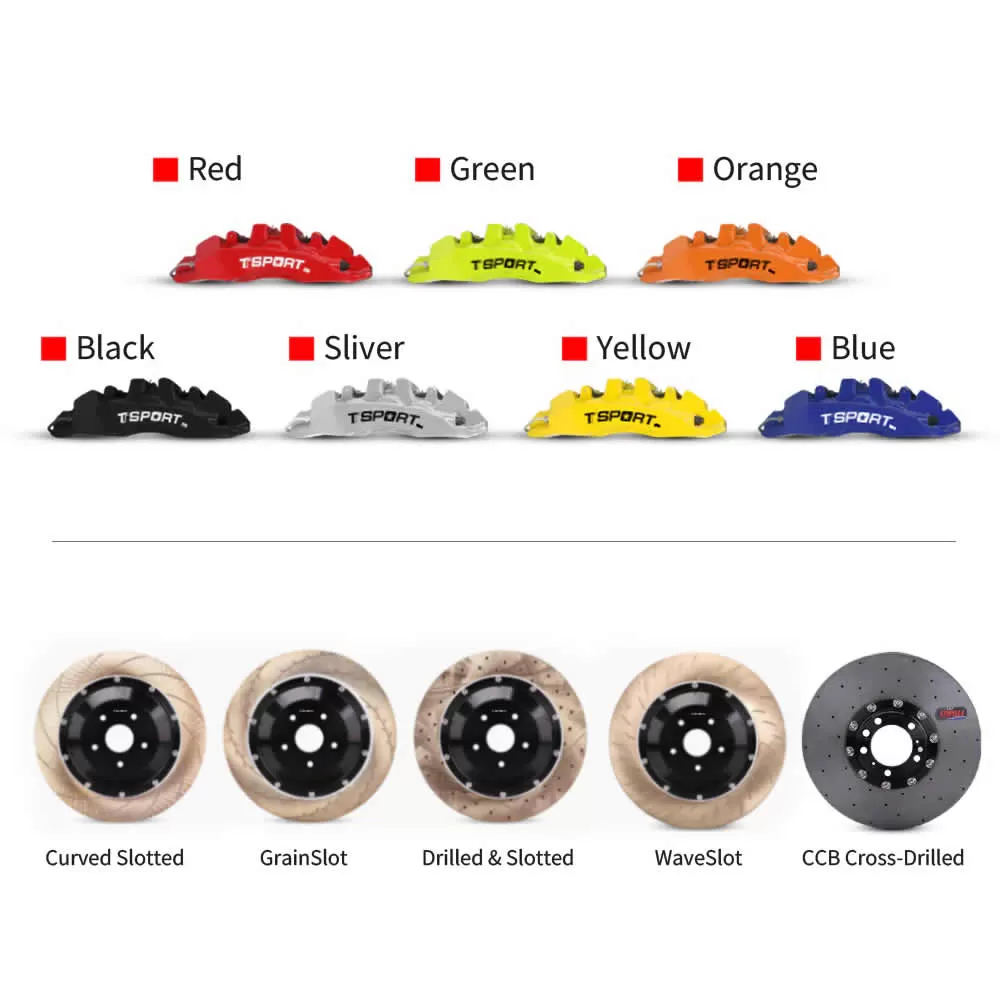
The entire lineup comes standard with 36mm-thick, two-piece internally ventilated brake discs. Three diameter options are available, with a choice of either steel or carbon-ceramic materials:
|
Series
|
Evolution
Series
|
|
Model
|
EB6
|
|
Axle
Position
|
Front
|
|
Piston
Count
|
6-piston
|
|
Piston
Type
|
Two-piece
heat-insulated, with dust boots
|
|
Piston
Diameters
|
30 mm ×
2 / 34 mm × 2 / 38 mm × 2
|
|
Total
Piston Area
|
55.0 cm²
per caliper
|
|
Caliper
Dimensions
|
L 335 ×
W 160 × H 102 mm
|
|
Construction
|
Two-piece
forged aluminum
|
|
Net
Weight
|
4.6 kg
per caliper (without pads)
|
|
Surface
Finish
|
High-temperature
gloss coating
|
|
Recommended
Wheel Size
|
19 in or
larger
|
|
Recommended
Rotor Size
|
Ø380–410
mm × 36 mm
|
|
Brake Rotor Options
|
|
Rotor
Option
|
Steel /
High-Carbon Option
|
Carbon-Ceramic
Option
|
|
Rotor
Material
|
Steel
(High-Carbon)
|
Carbon-Ceramic
(CCB)
|
|
Diameter
× Thickness
|
Ø380 /
390 / 410 × 36 mm
|
Ø380 /
390 / 410 × 36 mm
|
|
Construction
|
Two-piece,
internally vented
|
Two-piece,
internally vented
|
|
Mounting
|
Fixed or
floating (size-dependent)
|
Floating
|
|
Rotor
Face Pattern
|
Curved /
Grain / Wave slot or drilled-and-slotted
|
Cross-drilled
|
|
Directional
|
Yes — left/right
specific
|
Yes —
left/right specific
|
|
Brake Pad Options
|
|
Pad
Option
|
Steel-Rotor
Pad
|
Carbon-Ceramic
Pad
|
|
Compatible
Rotor Material
|
Steel /
high-carbon rotors only
|
Carbon-ceramic
rotors only
|
|
Operating
Temperature Range
|
0–600 °C
|
0–700 °C
|
|
Average Friction
Coefficient
|
Average
μ: 0.38
|
Average
μ: 0.45
|
|
Lines
|
|
Brake
Line Construction
|
Three-layer
construction
|
|
Brake
Line Material
|
PTFE
inner liner / SUS304 stainless braid / PVC protective outer sheath
|
|
Brake
Line Fittings
|
Vehicle-specific,
caliper- and chassis-side
|
|
Brackets
|
|
Rotor
Hats
|
CNC-machined
high-strength aluminum alloy
|
|
Caliper
Brackets
|
CNC-machined
carbon steel, radial mount
|
|
Caliper
Mounting
|
Radial
mount with vehicle-specific brackets
|
|
Fitment & Installation
|
|
Minimum
Spoke Clearance
|
103 mm
|
|
Recommended
Wheel Size
|
19 in or
larger
|
|
Rotor
Diameter Selection
|
380,
390, or 410 mm, selected according to application and wheel clearance
|
|
Bedding-In
Procedure
|
Required
before aggressive use
|
Steel brake discs feature lightweight CNC-machined aluminum hats; this design mitigates disc deformation caused by thermal expansion and contraction, thereby reducing the risk of brake judder.
Brake Pad Specifications
Specific brake pads are matched to each disc type; official specifications are as follows:
Pads for steel discs: Operating temperature range of 0–600°C and an average friction coefficient (μ) of 0.38. Suitable for daily street driving and light-to-moderate track use, with a formulation that minimizes excessive disc wear.
Pads for carbon-ceramic discs: Operating temperature range of 0–700°C and an average friction coefficient (μ) of 0.45. Formulated specifically for carbon-ceramic disc surfaces, offering superior braking force stability at high temperatures.
3. Ancillary Components and Complete Kit
Key Ancillary Components
Braided stainless steel brake lines: Feature a three-layer design—an inner PTFE layer, a middle SUS304 stainless steel braid, and an outer PVC protective sheath. This construction virtually eliminates hose expansion under high pressure, resulting in a firmer pedal feel and more direct transmission of braking force. Fittings are vehicle-specific, ensuring a precise match for both chassis and caliper connection points.
Installation hardware: Caliper mounting brackets are CNC-machined from high-carbon steel, and disc hats are made from high-strength aluminum alloy; both are custom-engineered based on vehicle-specific data. A complete set of mounting fasteners is included as standard.
Standard Kit Contents
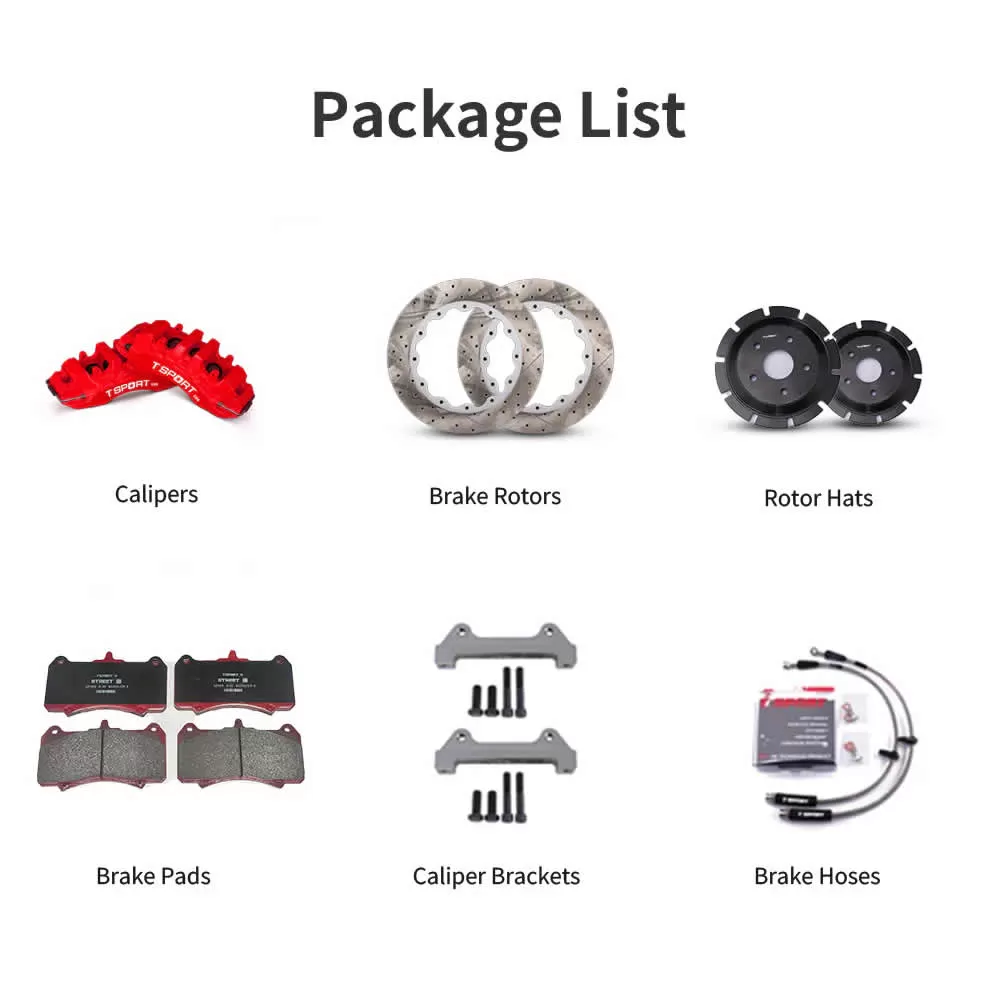
The complete vehicle-specific front brake kit includes:
Calipers ×2: 2 × EB6 forged 6-piston front calipers (left/right)
Brake Pads: 1 × Set of matched brake pads for both calipers
Brake Rotors ×2: 2 × Two-piece front rotors (steel or CCB; size of choice)
Caliper Brackets ×2: 2 × CNC carbon-steel caliper mounting brackets
Rotor Hats ×2: 2 × CNC aluminum rotor hats
Brake Hoses ×2: 2 × Stainless-steel braided brake lines
Complete set of installation hardware
4 Fitment Requirements and Installation Specifications
Mandatory Installation Prerequisites
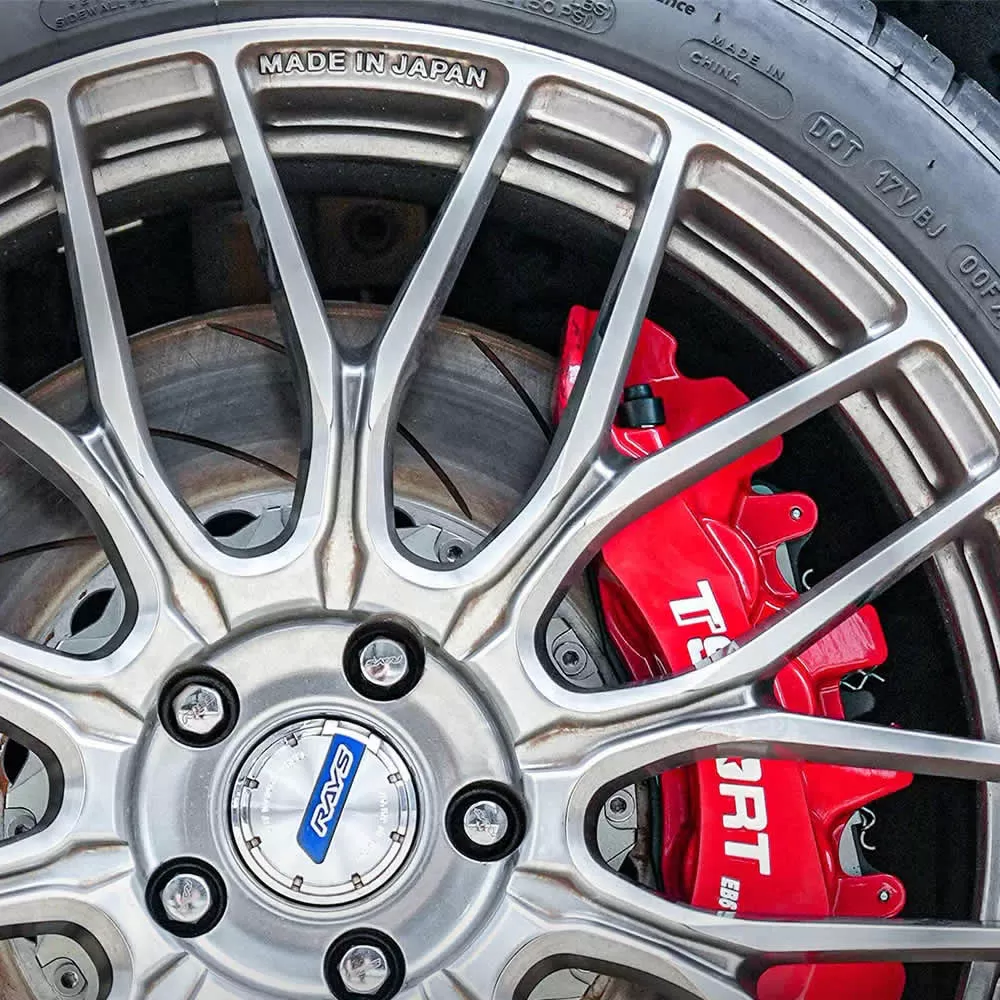
Wheel Size: Minimum 19-inch wheels required; 380mm rotors are the baseline for 19-inch wheels, while 390mm/410mm large rotors require larger wheels and ample spoke clearance.
Internal Wheel Clearance: Minimum clearance of 103mm is required between the rotor face and the inner surface of the wheel spokes; most OEM 19-inch wheels are incompatible due to spoke shape or concave designs, whereas aftermarket forged wheels usually allow for successful installation.
Fitment Method: This is a platform-based custom kit; compatibility with different vehicle models is achieved through vehicle-specific mounting brackets and brake line fittings. Complete vehicle details (model year, configuration, and wheel specifications) must be provided when ordering for compatibility verification.
Bedding-in Requirements: A proper brake pad bedding-in procedure must be performed before aggressive driving to establish a uniform friction material transfer layer on the rotor surface; failure to do so may result in issues such as brake judder or uneven braking force.
Confirmed Vehicle Fitment Range
Models with proven installation history via official and authorized channels include:
Family/Luxury MPVs: Honda Elysion, Toyota Alphard, etc.
Mid-to-Large Sedans and SUVs: Comparable models from Audi, BMW, and Mercedes-Benz, as well as heavier new energy vehicles (NEVs) such as NIO and Li Auto.
Sports sedans and urban SUVs of similar classes can also be accommodated through custom mounting brackets.
5. EB6 Related Questions
What wheel sizes are compatible with the EB6 brake calipers?
The EB6 requires 19-inch or larger wheels with a minimum inner spoke clearance of 103mm. Some OEM 19-inch wheels may not fit due to spoke geometry; if you are unsure, please send us a photo of the inner wheel profile.
How do you choose between 380mm, 390mm, and 410mm brake discs?
Larger discs offer increased heat capacity and braking torque but require more wheel clearance and add rotational mass. 380mm is a safe baseline for most 19-inch wheels, while 390mm and 410mm options are suited for owners who engage in frequent hard braking or track driving and have wheels large enough to accommodate them.
Steel rotors or Carbon-Ceramic (CCB) rotors?
High-carbon steel discs handle rigorous street and track driving, are easier to maintain, and cost less. Carbon-ceramic discs significantly reduce unsprung mass, withstand higher sustained operating temperatures (pad operating range of 0–700°C), and offer a longer service life under normal use; however, they have a higher upfront cost and require compatible carbon-ceramic brake pads.
Why use staggered piston diameters?
The trailing edge of a brake pad often exerts more bite than the leading edge, leading to tapered wear. A staggered 30/34/38mm piston layout applies greater clamping force to the leading pistons and less to the trailing ones, balancing pressure across the friction surface to ensure even pad wear and smoother braking control.
Does the pedal feel really change?
Yes. Forged calipers resist deformation, and larger pistons displace more fluid for greater clamping force, while stainless steel braided lines prevent hose expansion. The pedal feels firmer initially, offers more linear travel, and provides clearer feedback during threshold braking.